
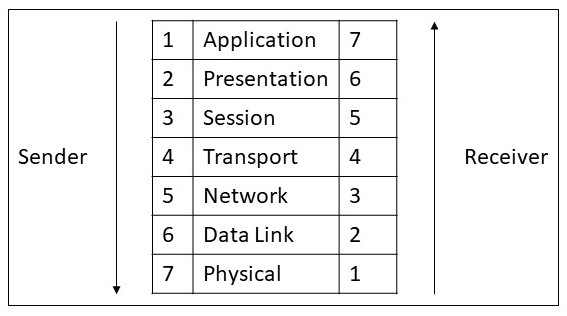
The Open Systems Interconnect model (OSI Model) explains all the individual functions that are necessary for the Internet to work.
Physical Layer
The Physical layer of the OSI model is responsible for the transfer of bits — the 1’s and 0’s which make up all computer code.
Physical Layer is anything that carries 1’s and 0’s between two nodes.
This layer represents the physical medium which is carrying the traffic between two nodes. An example would be your Ethernet cable or Serial Cable.
Data Link Layer
The Data Link layer of the OSI model is responsible for interfacing with the Physical layer. Effectively, Layer 2 is responsible for putting 1’s and 0’s on the wire, and pulling 1’s and 0’s from the wire.
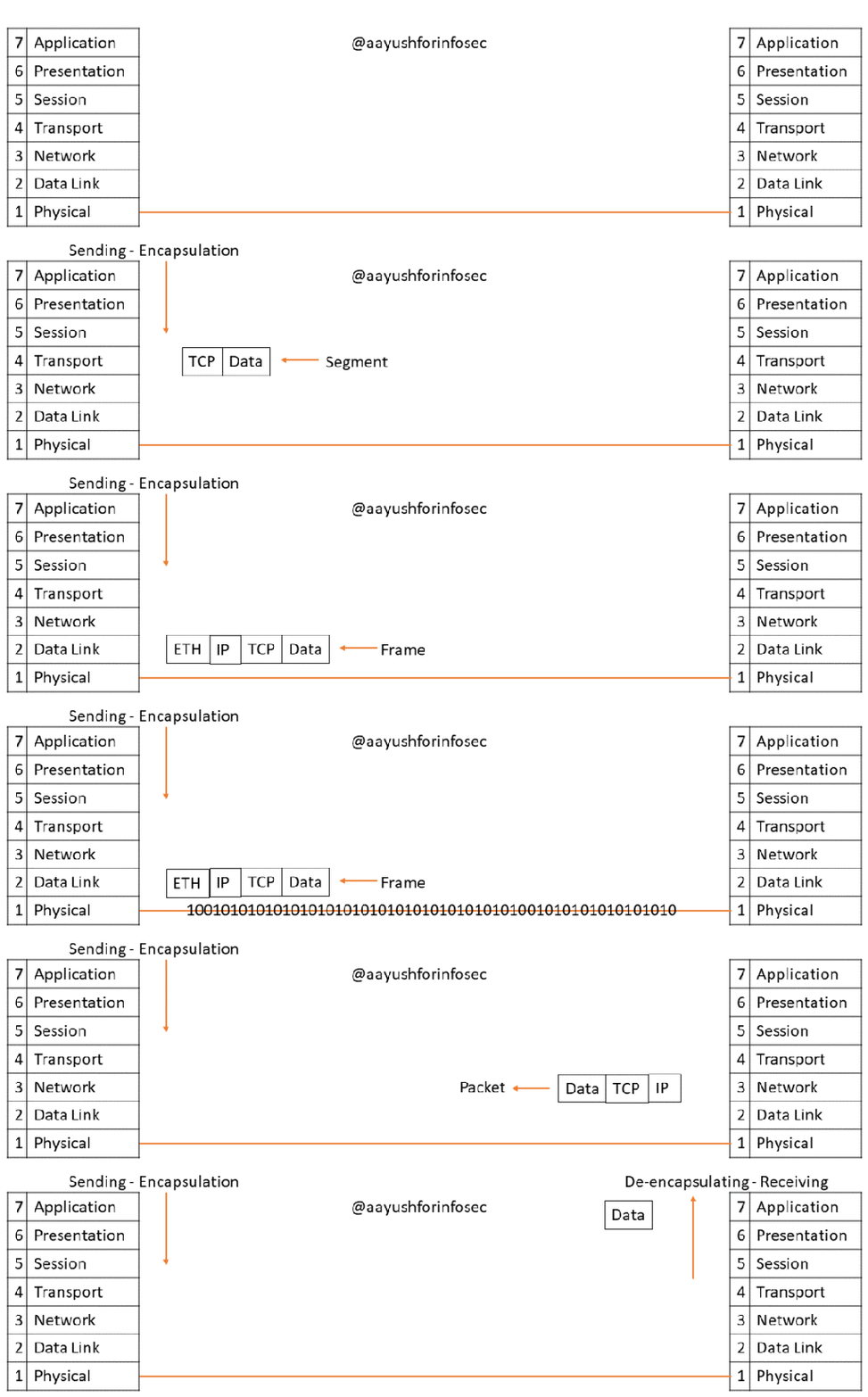
Data Link Layer will then group together those 1’s and 0’s into chunks known as Frames.
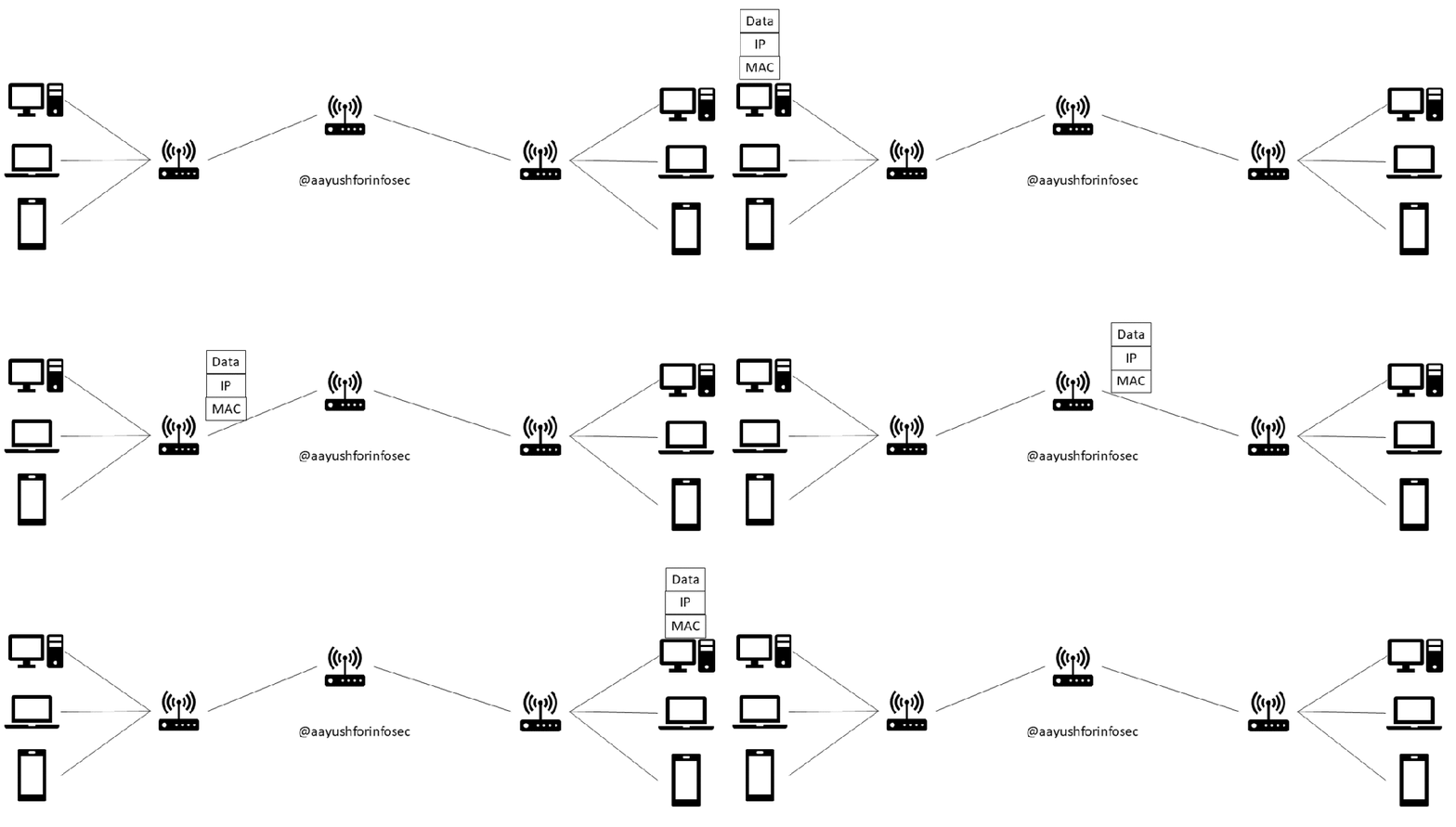
Lay Data Link Layer uses MAC addresses and is responsible for packet delivery from hop to hop.
For example: NIC cards
Network Layer
The Network layer of the OSI model is responsible for packet delivery from end to end.
This addressing scheme is known as the IP Address.
Network Layer uses IP addresses and is responsible for packet delivery from end to end.
Here the segments are break into packets that are further break in Frames at Data Link Layer.
For example: Routers
Transport Layer
Transport layer is responsible for distinguishing network streams.
Let’s say at a particular time you are using four different resources like email, video streaming, blogging and cloud computing. So the transport layer will be responsible to distinguish which data belongs to which resource.
Transport layer usually accomplish this by using Port Numbers.
Usually, two methods are used for distinguishing network streams known as the Transmission Control Protocol (TCP), or the User Datagram Protocol (UDP).
Both TCP and UDP have 65,536 port numbers each, and a unique application stream is identified by both a Source and Destination port.
In short, Data Link Layer is responsible for hop to hop delivery, and Network is responsible for end to end delivery and Transport Layer is responsible for service to service delivery.
Session Layer
Session Layer tries to see if it can set connection with the other computer over the network. Failing so it sends back an error and the process stopped. If a session is established then it is the task of session layer to maintain it, as well as synchronize transmission. The session layer is important as it creates its unique to the network. This helps you to make multiple requests to different endpoints simultaneously without all the data getting mixed up.
When the session layer has successfully logged a connection between the host and remote computer the data is passed down to Layer 4: the transport Layer.
Presentation Layer
It receives data from the application layer. This data tends to be in a format that the application understands, but it’s not necessarily in a format that could be understood by the application layer in the receiving computer. The presentation layer translates the data into a particular format, as well as handling any encryption, compression or other transformations to the data. With this complete, the data is passed down to the session layer.
Application Layer
This layer essentially provides networking options to programs running on a computer. It works almost exclusively with applications, providing an interface for them to use in order to transmit data. When data is given to the application layer, it is passed down into the presentation layer.
Discover more from Information Security Blogs
Subscribe to get the latest posts sent to your email.
